

How Custom Nutrition Programs Beat One-Size-Fits-All Blends
When you’re running a cropping operation, you know better than anyone that every paddock tells a different story:
- Your soil isn’t the same as your neighbour’s.
- Your crop history isn’t the same.
- Your rainfall isn’t the same.
Yet most farmers are still working with generic fertiliser blends that treat all land like it’s identical. That’s where custom nutrition programs (aka custom fertiliser programs) come in – and they’re not just a nice-to-have extra. They’re the difference between average yields and genuinely optimised production.
The reality is this: a one-size-fits-all approach means you’re either over-applying nutrients you don’t need (wasting money), under-applying what you do (leaving yield on the table), or both.
A tailored crop nutrition strategy lets you match exactly what your soil and crop actually require at each growth stage. We’ve seen this work across NSW, Tasmania, and beyond — and the results speak for themselves.
The Problem with Generic Fertiliser Programs
Buying a standard blend because “that’s what everyone uses” is like wearing the same shoe size as your mate and hoping it fits. It probably won’t.
When you apply a generic mix, you’re making assumptions. You’re assuming your phosphorus levels match the industry average. You’re assuming your boron, zinc, and manganese are where they need to be. You’re assuming your soil pH is ideal.
But paddock soil varies massively – even within a single property – and so do your crop requirements depending on what you’ve grown before.
Here’s what happens with the one-size-fits-all approach:
- Nutrient imbalances: You might load the blend with extra potassium to cover high-demand scenarios, but your soil already has plenty. That extra K ties up magnesium and calcium, and now you’ve created a problem you didn’t have before.
- Wasted spend: If your soil tests show adequate phosphorus but your blend has high MAP regardless, you’re throwing money at something you don’t need. Over multiple seasons, that adds up fast.
- Missed yield potential: The flip side is under-application. Your soil might be critically short of boron, but a generic blend assumes “average” boron. Your crop hits flowering and suddenly you’re seeing reduced seed set. You’ve left yield on the table because the blend didn’t account for your specific soil deficiency.
- Timing and form: Generic blends are usually granular. Granular works fine for basal applications, but it won’t help you when your crop needs a nutrient hit during flowering or grain fill. By then, the granule’s already been in the soil for months.
The cost isn’t just financial. It’s lost production. It’s frustration. It’s knowing something’s not quite right but being unsure what to change.

What a Custom Nutrition Program Actually Looks Like
A custom program isn’t complicated, but it is specific. It starts with data and builds from there.
The basic structure looks like this:
- Basal application (pre-planting or at sowing): Based on your soil test results, you get a blend that matches what’s actually missing. If your soil is low in zinc and manganese but adequate in phosphorus, your basal goes heavy on the micronutrients and light on the P. You’re not paying for what you don’t need.
- In-season foliar applications: Once the crop’s growing, you can target specific nutrients at critical windows – like boron and calcium at flowering for canola, or nitrogen and potassium during grain fill for wheat. Liquid applications work faster than granular, and they reach the plant when it needs them most.
- Timing flexibility: A custom program adjusts timing based on your crop calendar, your weather, and your soil conditions. You’re not locked into a fixed schedule; you’re responding to what’s actually happening in your paddocks.
- Trace element coverage: Instead of guessing at trace minerals, a proper program includes specific rates of boron, zinc, manganese, copper, and molybdenum – each one targeted to your soil test results and your crop’s expected demand.
The structure changes depending on your crop. Wheat looks different from canola, which looks different from potatoes. But the principle’s the same: measure, plan, apply, monitor.
Soil Testing: The Starting Point
You can’t build a custom program without baseline data. That’s where soil testing comes in.
If you haven’t tested in a few years, now’s the time. A proper soil test gives you:
- Macronutrient levels: Nitrogen (though this is variable), phosphorus, potassium, calcium, magnesium, sulphur. You need to know what’s already there before you add more.
- Micronutrient status: Boron, zinc, manganese, copper, molybdenum. These are easy to miss, but a deficiency can smash your yield.
- pH and soil health indicators: If your pH is off, nutrient availability tanks. Other measurements tell you about organic matter, clay content, and microbial activity.
- Organic matter: This affects how much nutrients your soil can hold and release to the crop.
Once you’ve got the data, an agronomist can build a program around it. That’s when the real customisation happens. You’re not guessing anymore.
Real Results from Tailored Programs
The data from our customers tells the story better than any marketing pitch could.
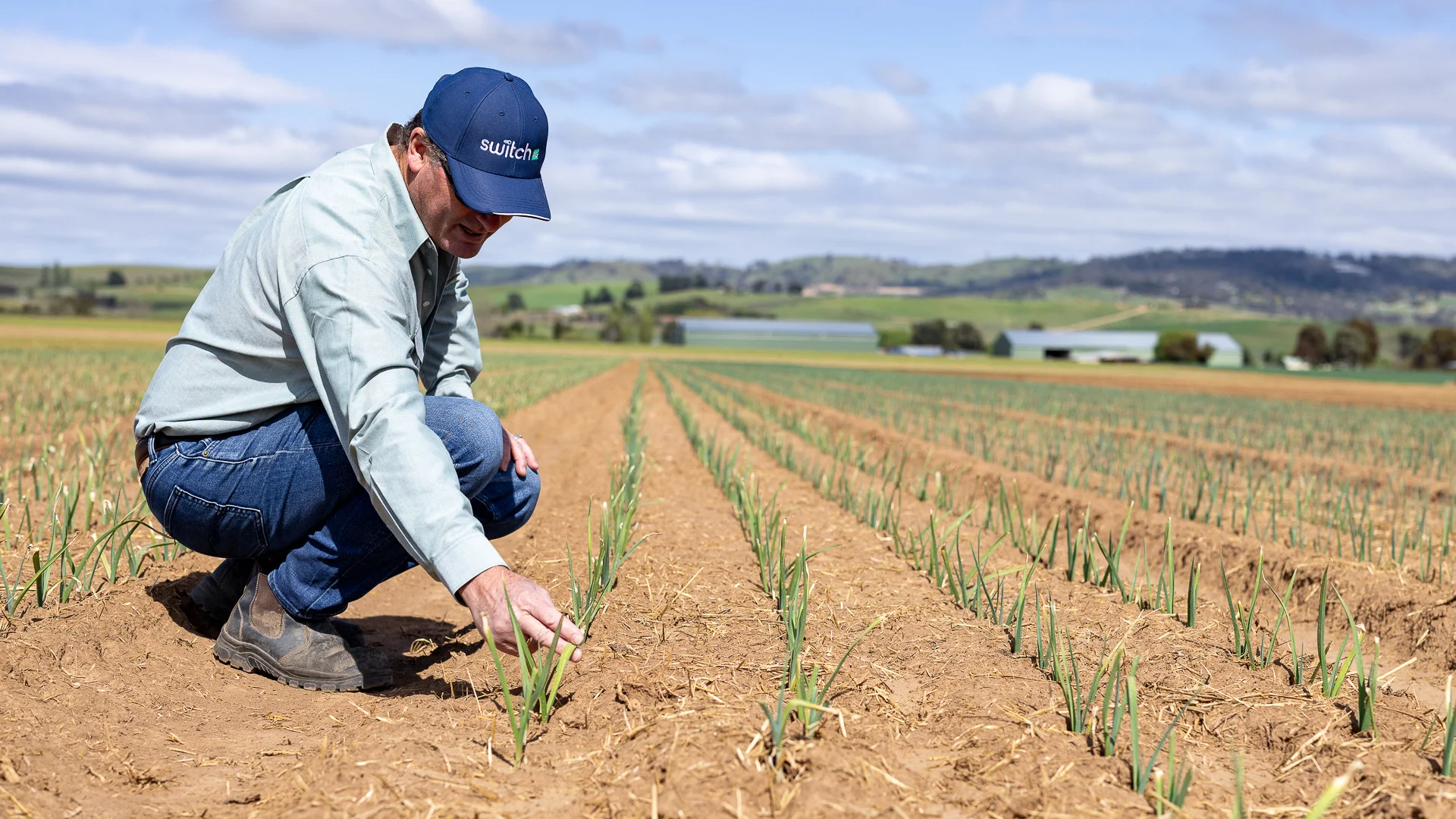
Take Craig Hall and Chris Groves at Cowra in NSW. They’ve been using custom nutrition programs with Switch Ag for years now.
“Testing and measurement has allowed specific applications of nutrients and trace minerals that we know are low in our cropping systems.”
The result? They’ve reduced their chemical applications significantly while keeping yields consistent. They’re not throwing product at the problem; they’re solving the actual problem. That’s smarter farming and a better bottom line.
Then there’s the Junee wheat trial. We ran replicated trials comparing liquid fertiliser programs against granular. The liquid-based custom program outperformed granular across the board. Why? Because you can target nutrients at critical growth stages when the crop can actually use them.
One of our most dramatic results came from a potato nutrition trial in the Riverina. A tailored foliar program with our liquid range delivered an ROI of $8,000 per hectare. Think about that number. That’s not incremental improvement… That’s genuinely transformational.
We’ve also seen a 30% yield increase in wheat when farmers combined reduced MAP application (because soil tests showed they had enough phosphorus) with targeted liquid fertiliser during critical growth windows. They’re using less product overall but getting better results because it’s going exactly where it needs to go.
Microsoil’s another game-changer. When you mix it with manure or compost, it dramatically improves how efficiently your organic inputs work. You’re not just applying nutrients; you’re improving the whole system.
Getting Started with a Custom Switch Ag Program
The process is straightforward.
First, you get a soil test done if you don’t have recent data. We can point you toward the labs we recommend, or you can use your preferred one. Either way, get the full workup – macros, micros, pH, organic matter.
Once you’ve got results, reach out to our team. We’ve got agronomists with real experience – Allan’s got 30 years in agronomy, and we work with specialists like Darren and Jacob at Canowindra, Scott in Tasmania, and Kylie running our research. They’ll review your soil data, talk through your cropping history, understand your goals, and build a custom program for your situation.
The program includes a basal blend matched to your soil test, timing and rates for in-season foliar applications, and guidance on application windows. We’ll also flag any trace element deficiencies you need to address.
Then you execute the program and monitor results. As the season progresses, you’re tracking what’s working. Next year’s program builds on that learning.
It’s not magic. It’s measurement, planning, and execution. But that combination delivers results that generic blends simply can’t.
You’ve worked too hard to optimise everything else on your farm to leave nutrition to chance. A tailored program costs less than it sounds and pays for itself through better yields, lower overall spend, and crops that actually reach their genetic potential.
Ready to review your current program?
Book a free agronomist consultation with Switch Ag. We’ll walk through your soil data, your crop history, and what a custom program could look like for your paddocks.
Contact us via email (admin@switchag.au), phone (0411 156 839), or by filling out the form on our Contact page.