

What Is Biological Fertiliser? A Plain-English Guide
Ask ten people in the ag industry what “biological fertiliser” means, and you’ll get ten answers. Some will tell you it’s organic. Some will tell you it’s a soil conditioner. A few will tell you it’s snake oil dressed up in a drum.
None of those are quite right. If you’re weighing up biological inputs for your program, you deserve a straight explanation before anyone tries to sell you anything. So here it is.
What Makes a Fertiliser “Biological”?
A biological fertiliser feeds the plant and the soil biology at the same time. Most products in this category are built from three parts:
- Plant-available nutrients,
- Beneficial microbes, and
- A carbon or biostimulant base that those microbes can actually live on.
That third part is what separates a biological product from a straight nutrient.
You’re not just applying an element and hoping the plant finds it – you’re applying it alongside the biology and the food source that helps move it into the plant.
Two things worth clearing up:
One, Biological doesn’t mean organic. Organic certification is a separate standard with its own certifier, audit trail and certificate number, and it’s a different conversation entirely.
And two, biological doesn’t mean low-analysis or soft. A well-built biological program still has to deliver the nutrients your crop needs, in the amount it needs, at the time it needs it.
How Biological Fertilisers Work in the Soil
Here’s the part most growers already know from experience: a lot of the nutrient sitting in your soil isn’t available to your crop. Phosphorus ties up against calcium, iron and aluminium depending on your pH. Trace elements sit in forms the root can’t take up. You’ve paid for that nutrient; it’s in the paddock, and the plant can’t reach it.
Soil biology is the mechanism that unlocks it. Microbes and root exudates change the chemistry immediately around the root, which shifts locked-up nutrient into a form the plant can use. Anything that improves that process improves the return on fertiliser you’ve already applied.
How you apply it changes what you get.
Liquid products put nutrient and biology straight into the root zone or onto the leaf, where uptake happens quickly – that’s the Microsoil range, and it’s why liquids suit tactical, in-crop decisions.
Biologically enhanced dry fertiliser like Microfert works over a longer window, targeting soil structure, water penetration and root performance rather than a fast response.
Where Biological Inputs Fit Alongside Conventional Fertiliser
This is where most of the confusion sits, so let’s be direct: for the vast majority of Australian farms, biological fertiliser is not a day-one replacement for your base program. It’s an efficiency play sitting on top of it.
The approach we see work looks like this:
- Keep the base program that suits your soil and your rotation.
- Add biology and targeted nutrition at the points where the plant is most responsive – at the seed, through early establishment, and at the growth stages that set yield.
- Measure what happens.
- Then adjust the base program if the data says you can.
Growers who go the other way – pulling the base program out in year one and replacing it with biology – usually get a result they can’t interpret. Too many variables changed at once. You’ve learnt nothing you can build on.
What the Trial Data Actually Shows
We’d rather show you numbers than adjectives, and we’d rather tell you exactly where each number came from than round it into a marketing claim.
Three examples from our replicated trial work:
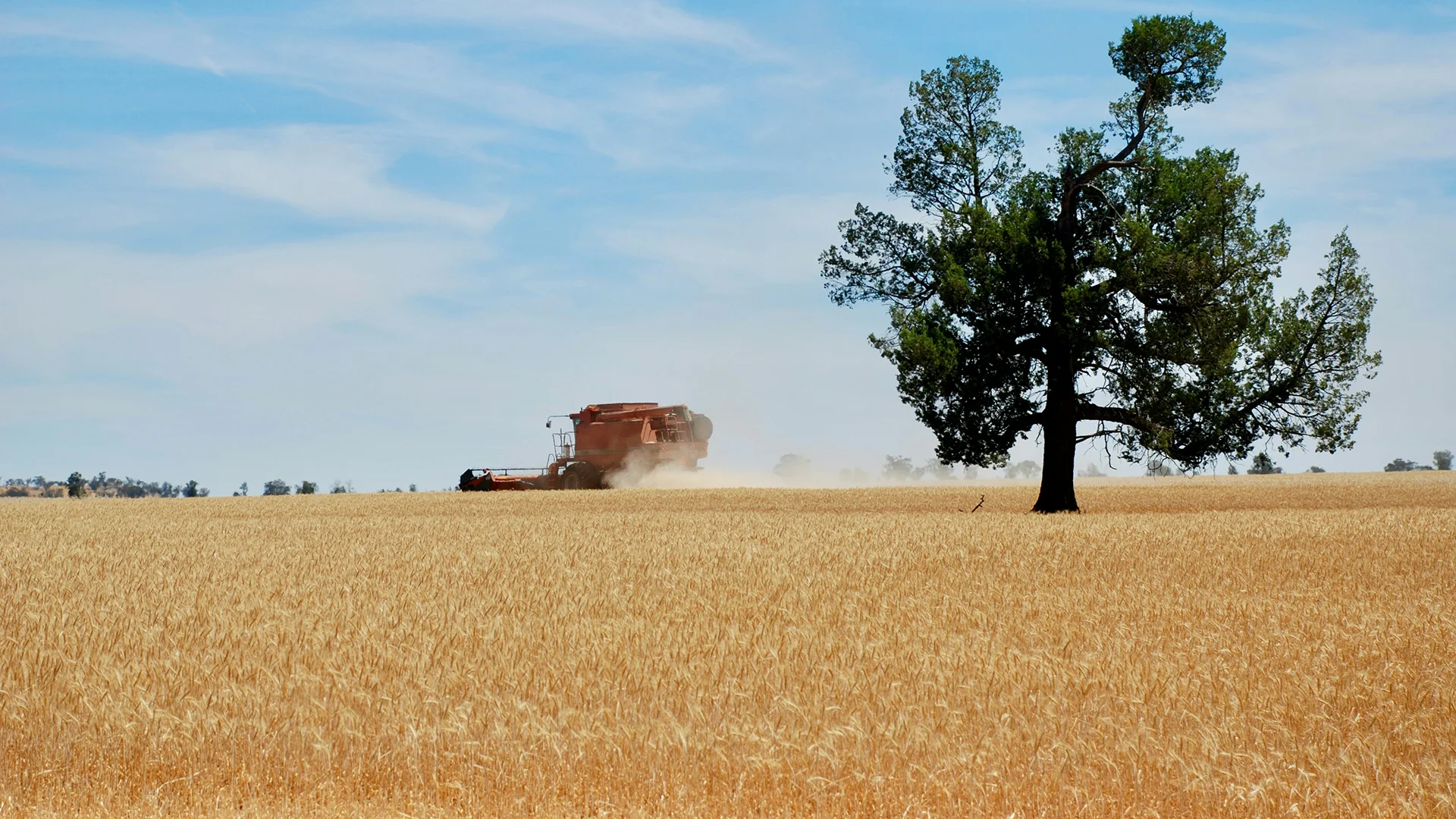
- A replicated small plot wheat trial took place in Cowra, NSW, in September 2023, returning a 25% yield increase.
- A 2012 replicated wheat trial at Temora Research Station, also with Landmark: a 20% yield increase and a $179 per hectare return.
- A replicated potato foliar nutrition trial run in spring 2025: approximately $8,000 per hectare return on investment.
Those are specific trials, on specific crops, in specific seasons and soil types. They’re evidence the products work when they’re matched properly – not a forecast for your paddock.
The full set of results, including the trials that returned less, is on our research data page. Read the ones that match your crop and your region.
How to Know If It’s Working on Your Farm
Whatever you trial, trial it so you can measure it. Leave a check strip. Run treated and untreated sections side by side in the same paddock, same soil type, same seeding rate, and take them through to yield separately.
Beyond that: soil test at the same point in the rotation each year so you’re comparing like with like, and use SAP or tissue testing during the season to see what the plant is actually taking up rather than what’s theoretically in the ground.
Track results by paddock over several seasons, not by season alone – one wet year or one dry one will tell you more about the weather than about the program.
Talk to a Switch Ag Agronomist
Biological fertiliser isn’t a product you buy off a shelf and hope for. It works when it’s matched to your soil test, your crop, your rotation and your budget – which is why we build custom fertilisation programs, rather than sell one program to everyone.
Send us a recent soil test, and we’ll walk through what it’s telling you and where biology would earn its keep on your place. No obligation, and no pressure to change everything at once.
Contact us via email (admin@switchag.au), phone (0411 156 839), or by filling out the form on our Contact page.